

There’s an old idea that the brain is fixed — that what you’re born with is what you get, and that aging means a slow, inevitable decline in mental sharpness. Science has largely moved on from that idea. What researchers now understand is that the brain remains adaptable well into later life, and that the choices we make every day — how we move, what we do, who we spend time with — have a real and measurable effect on how well it functions.
At CiminoCare, we embrace this concept and fold it into our meaningful moments.
A Little Brain Tour
Your brain is constantly at work — forming new connections, pruning old ones, responding to the world around it. Neuroscientists call this neuroplasticity: the brain’s ability to change and reorganize itself throughout life. It doesn’t stop in your 70s or 80s. It just needs the right conditions to thrive.
Those conditions aren’t complicated. They look a lot like a good day: moving your body, using your mind, laughing with someone you like, sleeping well, eating something nourishing. The habits that feel good often are good — for your brain most of all.
What Games and Group Activities Do for Your Mind
Sitting down to a card game, a crossword, or a round of trivia isn’t just a way to pass the time. It’s genuine brain exercise.
When you play a game — any game — your brain is doing several things at once. It’s tracking information, making decisions, anticipating what comes next, and adapting when things don’t go as expected. These are exactly the kinds of mental demands that keep the brain engaged and alert.
Word games and puzzles strengthen the neural pathways involved in language, memory, and reasoning. Strategy games like chess or checkers ask the brain to think ahead and hold multiple possibilities in mind at once. Even a casual card game like rummy requires memory, pattern recognition, and a certain amount of social reading — picking up on other players, adjusting your approach.
Regular cognitive engagement has been linked to slower decline in memory and processing speed, and to a lower risk of dementia over time. The research doesn’t promise a cure or a guarantee — but it points consistently in the same direction: an active mind ages better than an idle one.
At CiminoCare, life enrichment is at the core of our programs – we want residents to stay engaged with each other, with our team members and with the community. Take a look at our calendars and you will see trivia, word puzzles, memory activities, group discussions, and creative projects— not as filler, but as real tools for mental wellness.
What Movement Does for Your Brain
Physical exercise may be the single most well-researched intervention for brain health. The evidence is consistent across decades of study: people who move regularly have better memory, sharper attention, faster processing, and lower rates of cognitive decline than those who don’t.
Here’s the simple reason why. When you exercise — even a gentle walk — your heart pumps more blood to the brain. That increased blood flow delivers oxygen and nutrients, and it also stimulates the release of a protein called BDNF (brain-derived neurotrophic factor), which supports the growth and survival of brain cells. Think of it as fertilizer for your neurons.
Exercise also reduces inflammation and stress hormones, both of which, when chronically elevated, can damage brain tissue over time.
You don’t need to run a marathon. Research consistently shows that moderate, consistent activity — daily walks, gentle stretching, chair yoga, light strength work — delivers meaningful brain benefits. The goal isn’t intensity. It’s regularity.
CiminoCare activities encourage residents to keep moving: walk to meals, participate in range of motion classes and how about the weekly TaiChi.
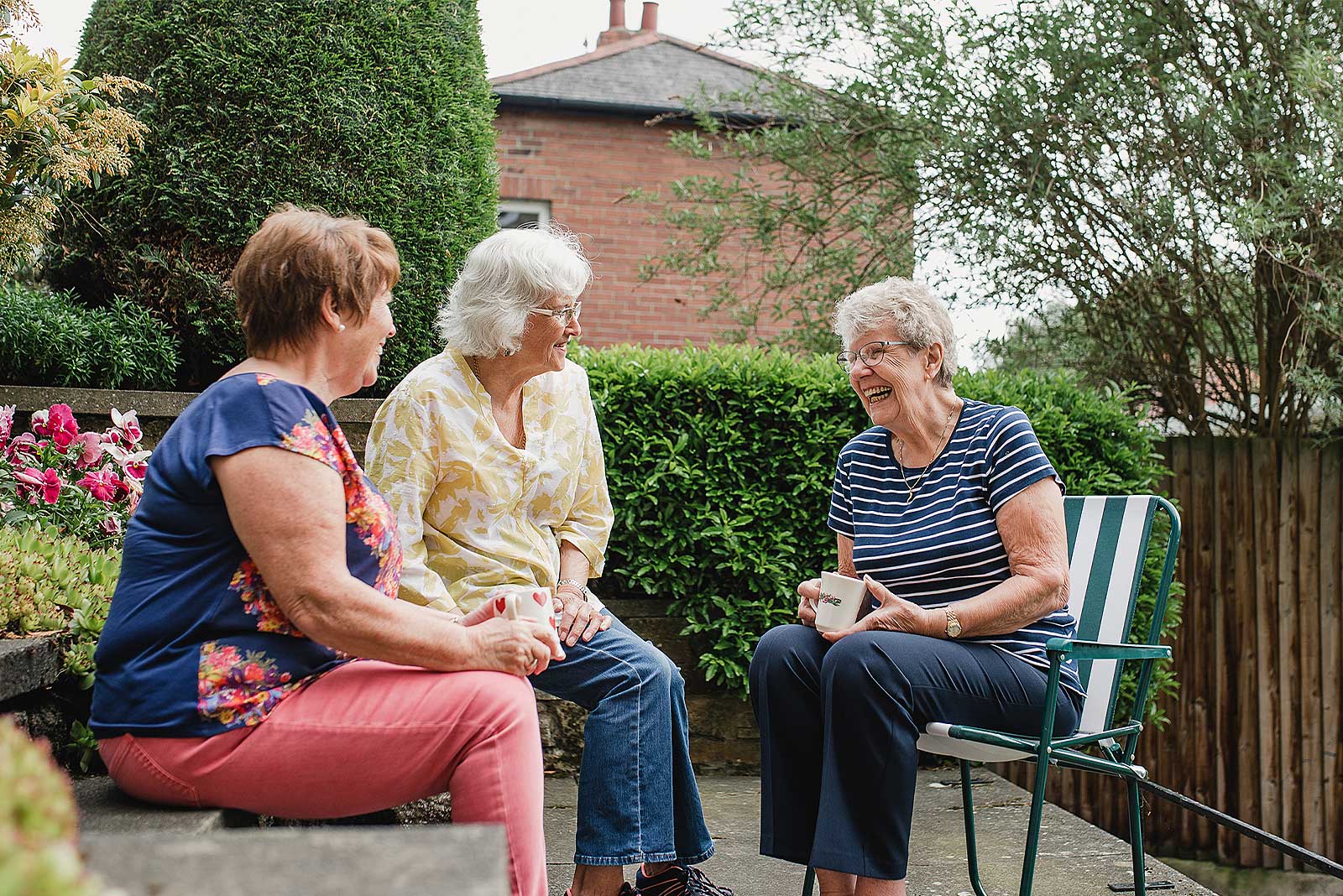
What Connection Does for Your Brain
Social isolation is one of the most significant risk factors for cognitive decline in older adults. The research on this is striking: loneliness and disconnection affect the brain in ways that parallel chronic stress — increasing inflammation, disrupting sleep, and reducing the mental stimulation that keeps the mind engaged.
The opposite is also true. Meaningful social connection is protective. Conversation requires attention, recall, and rapid processing. Relationships give the brain something to work toward — remembering shared history, reading social cues, navigating the give-and-take of real human interaction. These are some of the most demanding and rewarding things a brain can do.
Think about the benefits of assisted living which include shared meals, shared programs and interaction with other residents and team members who are always there. The social and supportive element amplifies the benefit of almost any activity.
What Creative Activity Does for Your Brain
Painting. Music. Storytelling. Making something with your hands. These activities engage the brain in a way that’s different from games or exercise — they ask for imagination, emotional expression, and fine motor coordination all at once.
Music in particular has an unusually powerful effect on the brain. It activates more areas simultaneously than almost any other activity. Listening to familiar music stimulates memory and emotion. Playing an instrument or singing engages motor, auditory, and linguistic systems together. For people living with dementia, music often reaches places that words no longer can.
CiminoCare is proud to partner with local musicians and singers as well as art therapy programs such as The Hummingbird program and Artesian Minds to engage residents in creative work – something that is therapeutic, failure free and fun.
At CiminoCare, we think about brain health as something that happens in the texture of ordinary days — not in a single intervention or program, but in the accumulated effect of movement, engagement, connection, and rest over time.


